Our vehicles
What we arrive in decides a lot about what can be done on site. A sewer needs different equipment than a blocked bathroom drain, and a septic tank needs different equipment again.
So here is a look at the vehicles we work with, and what each one is built for.
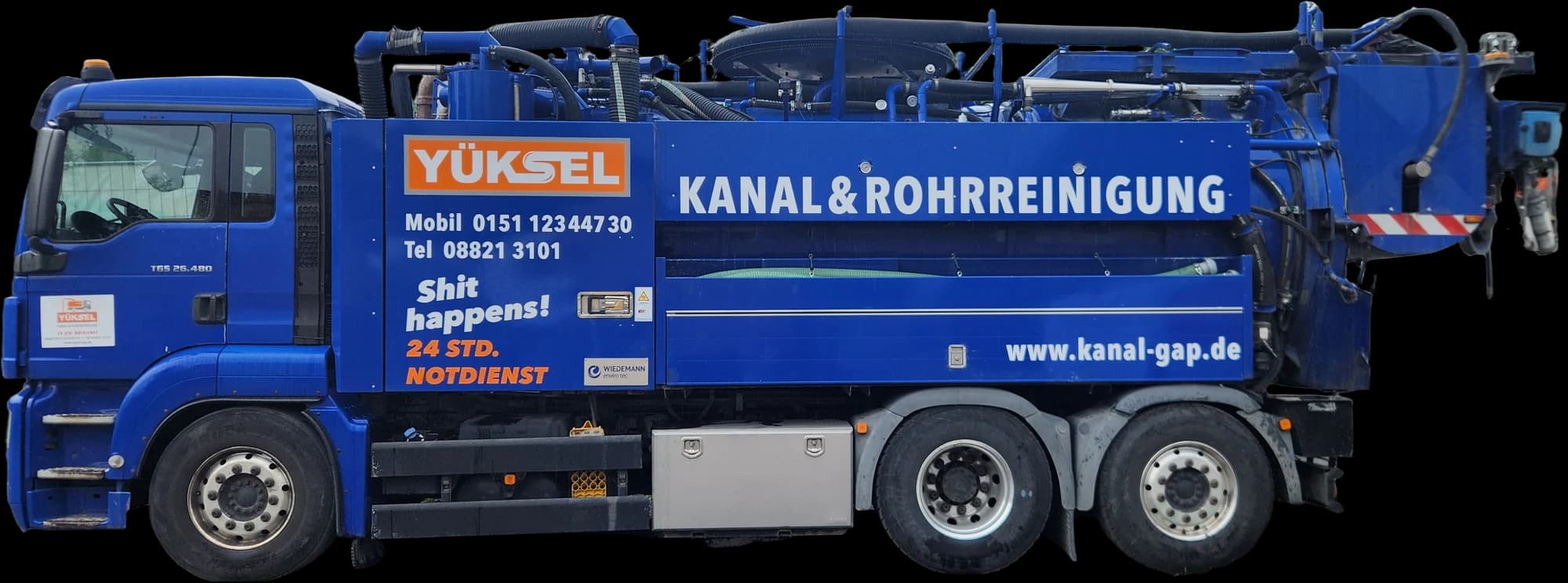
Cab
MAN TGS 26.480 with three axles. The type designation is on the cab. The number of axles decides how much water and sludge the truck may carry.
Lettering
Both phone numbers, the web address and the note about the emergency service. Anyone who sees the truck at the roadside has the number straight away.
Hoses and reels
The hoses sit on reels on top of the body. The high pressure hose is unwound from there and pushed into the pipe.
Tank
The tank is divided: clean water for jetting is drawn from one part, the vacuumed sludge goes into the other.
Chassis
Three axles carry water, sludge and equipment. That is why the truck needs an access road that can take the weight. On the phone this is often the first question.
Suction arm
The movable arm guides the thick suction hose over the manhole. It swings, so the truck does not have to park exactly above the opening.
Tap the dots on the image to learn more about the equipment.
Jetting and vacuum truck
The vehicle for sewers and main drains
Our largest vehicle and the one that comes along on most sewer work. It jets and vacuums in a single pass.
Visible on the vehicle
- Chassis
- MAN TGS 26.480, three axles
- Body
- Wiedemann
- Type
- Jetting and vacuuming in one vehicle, with water recovery
Worth knowing about the equipment
- A combined truck does both steps in one go: high pressure water loosens the deposits, the suction arm lifts them out of the manhole. Without that combination you would need two vehicles.
- The nozzle is pushed into the pipe against the direction of flow and works its way back. That way everything loosened travels towards the manhole instead of further into the sewer.
- This truck recovers its jetting water too: what it vacuums up is cleaned on board and used for jetting again. That saves fresh water and the trips to refill, and it stays on the job longer in one stretch.
Used for
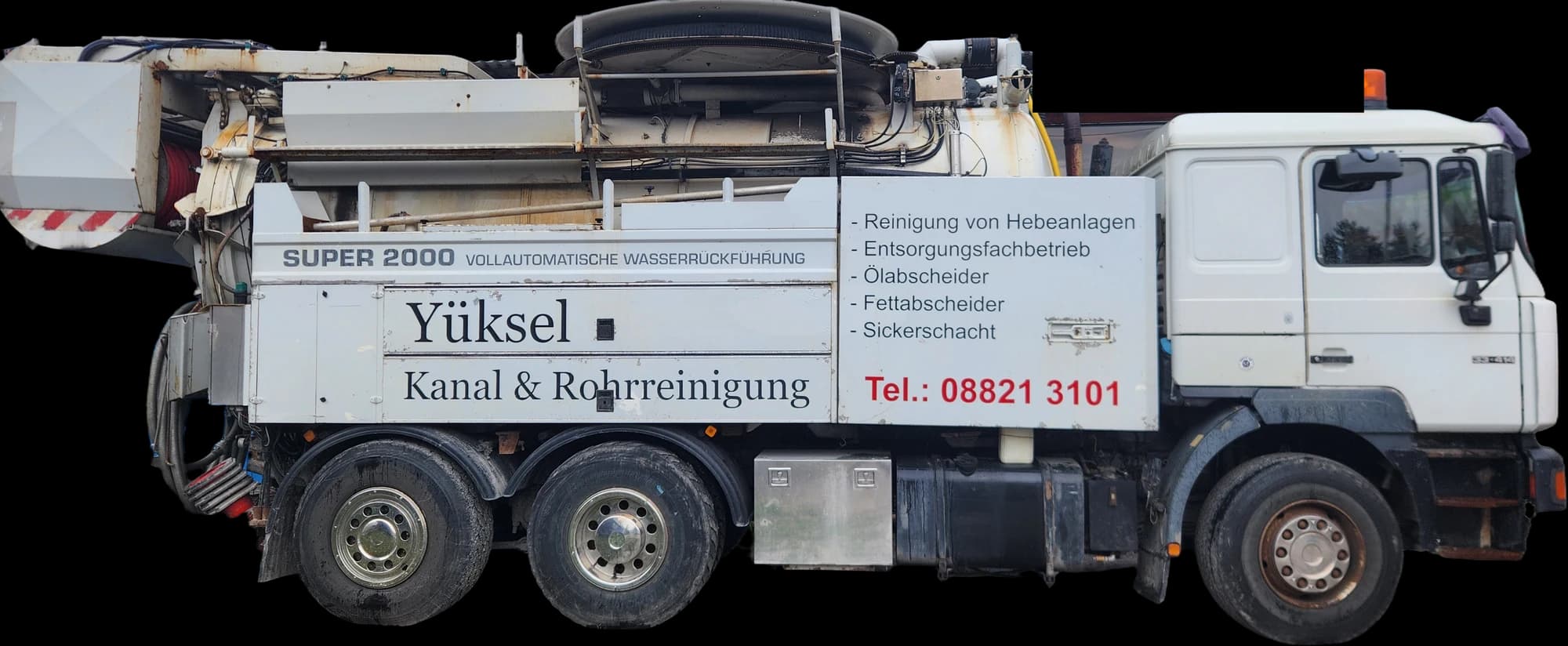
Cab
MAN chassis with three axles. The beacon on the roof is for working at the roadside.
Body
The lettering Super 2000 stands for the fully automatic water recovery: the jetting water is treated again on board.
Service list
The body states what the truck is built for: lifting stations, oil separators, grease traps and soakaways.
Hose drum
The large drum with the suction hose sits on top of the body. On site the hose is unwound and fed into the manhole.
Suction arm
The arm at the rear guides the suction hose. The red and white marking makes it visible in traffic when it is swung out.
Chassis
Three axles, because water and sludge are heavy. In narrow yards the service van has the advantage.
Tap the dots on the image to learn more about the equipment.
Recycling truck
Vacuum truck that treats its water on board
This vehicle cleans the water it has vacuumed up and jets with it again. That makes long jobs possible without driving off to fetch water.
Visible on the vehicle
- Chassis
- MAN, three axles
- Body
- Super 2000 with fully automatic water recovery
- Type
- Vacuum truck with on-board water treatment
Worth knowing about the equipment
- Water recovery means the vacuumed waste water is cleaned inside the vehicle and used for jetting again, instead of being carried along and disposed of later.
- That saves fresh water and the trips to refill. The truck stays on the job considerably longer in one stretch.
- For systems in businesses that are still running, exactly that matters, because every longer interruption gets in the way.
Water that works more than once
The truck does not carry the vacuumed water around to dispose of it later. It cleans it on board and keeps jetting with it.
- Considerably less fresh water per job
- Fewer trips to refill, so fewer kilometres driven
- Longer working time in one stretch, which counts for systems still in operation
Used for
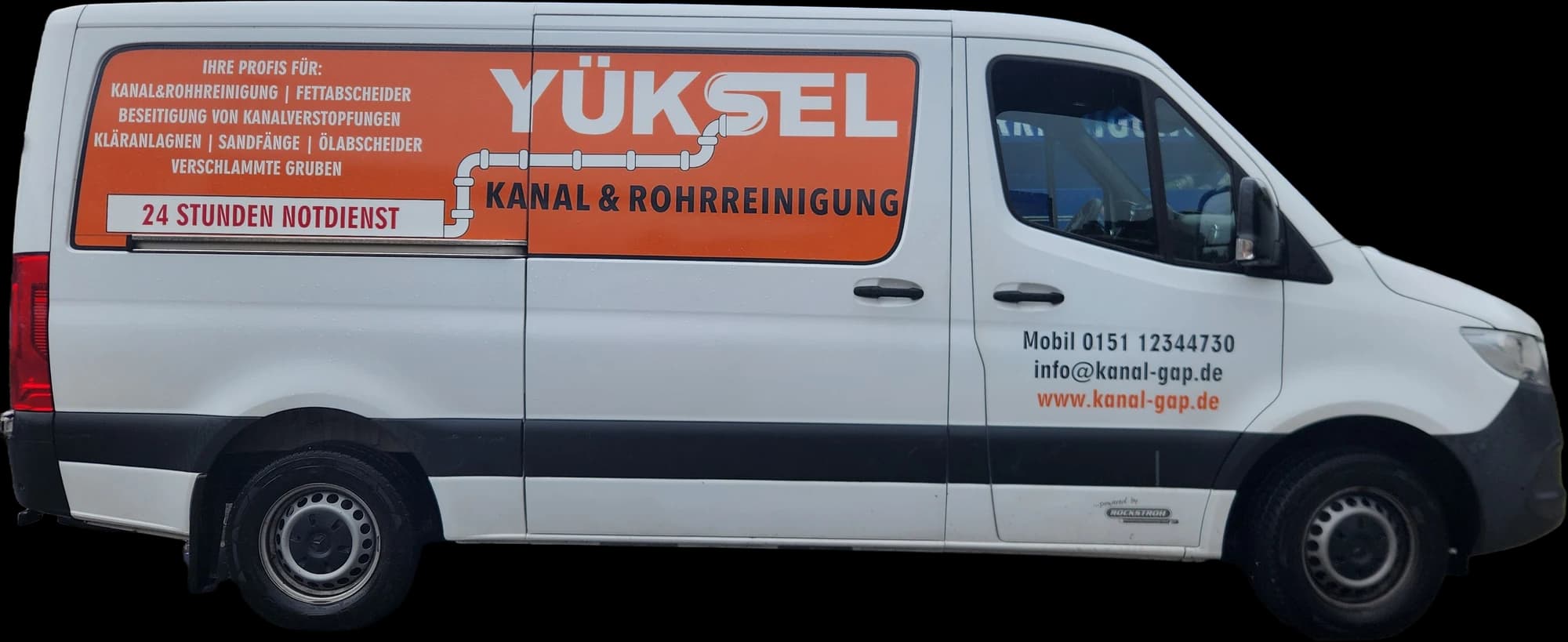
Service list
The side states what the company does: drain and sewer cleaning, grease traps, clearing blocked sewers, small treatment plants, sand traps, oil separators and silted cesspits.
Contact details
Mobile number, email and web address are on the driver's door, with the note about the 24 hour emergency service clearly beside them.
Cab
A panel van reaches places a three axle truck cannot: narrow entrances, underground car parks, inner courtyards.
Tap the dots on the image to learn more about the equipment.
Service van
For everywhere a three axle truck cannot go
The service van goes where a large truck does not fit. For work inside the building it is the obvious choice anyway.
Visible on the vehicle
- Vehicle
- Mercedes-Benz Sprinter
- Type
- Panel van
- Lettering
- Service list, mobile number and emergency note
Worth knowing
- Not every address can be reached with a three axle truck. Narrow entrances, underground car parks and inner courtyards are where the service van comes in.
- For work inside a flat it also matters that the equipment reaches the drain without a long haul.
Used for
We will add the technical data of each vehicle as soon as it is complete. What you see here is visible on the vehicle itself.
Which vehicle does your job need?
That is not for you to work out. Tell us briefly on the phone what has happened, and we bring what is needed.
Need help now? Just call.
Available around the clock, on weekends and public holidays too. We tell you on the phone when we will arrive.
Or send an email: info@kanal-gap.de